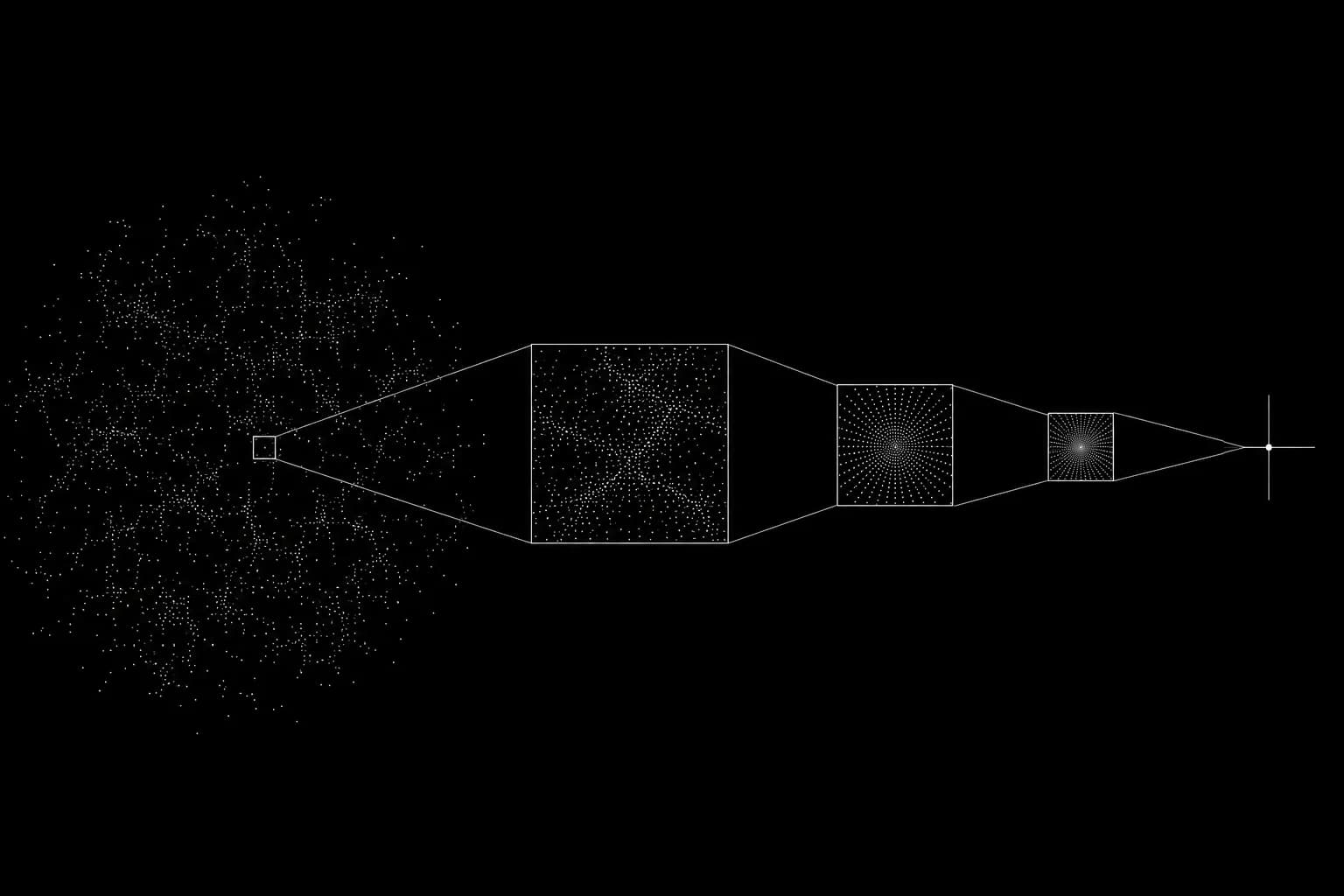
Most questions people bring to Oceanir are answered by Orca. Where is this? What gives it away? How sure are you? Orca returns the likely area, the clues it read in the frame and a confidence beside the answer. The median first look takes 4.7 seconds.
Some questions need more than an area. Which street is this? Which building? Is this really the place the caption says it is? For those, we built Orca Max.
Key takeaways
Orca answers most questions about a scene: where it is, what gives it away and how sure it is, in seconds.
Orca Max starts from that answer and keeps going for the street or the site.
It weighs more places, reads and looks up names, zooms into details and checks itself before it answers.
It names a street only when the evidence supports it, and says so when it can't.
What’s a Max?
Orca Max is not a different answer. It starts from the one Orca already gave and keeps going, with more time and more checks. Here is what it does that the standard check doesn’t:
- Aims for the street or the site
- The standard check stops at the likely area. Orca Max keeps going for the exact street or building.
- Weighs more candidate places
- It compares more possible places against your photo before it chooses.
- Searches the web
- When it can read a landmark, business or street name, it looks it up to confirm.
- Looks closer at details
- It zooms into parts of the photo, like signs and shopfronts, that one pass can miss.
- Checks itself
- A second, independent read is compared with the first. If the two disagree, the confidence comes down.
- Shows its evidence
- You see the clues it used and what each one points to.
- Tests a candidate
- Pick any candidate and have it checked against your photo and the satellite view of that spot.
85%
of answers came with a full evidence report: each clue, what it points to, and why
Orca: clues only
1 in 2
answers zoomed into details in the photo, like signs and shopfronts
Orca: none
+26%
more candidate places put in front of you
2.9 places per answer, against 2.3 for Orca
Orca and Max, side by side
| Orca | Orca Max | |
|---|---|---|
| Answers to | The likely area | The street or the site, when the scene supports it |
| Typical time | 4.7 s for a first look, 9 s with the reasons | About a minute (76 s median) |
| Places weighed | 3 to 5, by plan | 5 or 6 |
| Clues shown | Yes | Yes, with what each one points to |
| Zooms into signs and shopfronts | No | Yes |
| Looks up names it can read | No | Yes |
| Second, independent read | No | Yes; if the two disagree, the confidence comes down |
| Who can use it | Every account | Starter and Pro |
Times are medians measured in the Oceanir app, 30 days to 16 November 2026, from the start of a check to the answer on screen.
How hard each one thinks
Orca comes in two depths, and Orca Max is a third. Each one goes deeper than the last: more reasoning, more places weighed, more checks. Orca Max works through about eleven times as much analysis as Orca’s first look before it answers, in two passes instead of one.
Orca
First look
1×
- Reasoning
- Light
- Passes
- 1
- Places
- Up to 4
- Lookups
- No
- Time
- 4.7 s
Orca
With reasons
1.5×
- Reasoning
- Moderate
- Passes
- 1
- Places
- 3 to 5
- Lookups
- No
- Time
- 9.0 s
Orca Max
The closest look
11×
- Reasoning
- Deep
- Passes
- 2
- Places
- 5 or 6
- Lookups
- Yes
- Time
- 1 min 16 s
From the whole map to a street
We track our models on a set of 7,654 images, a portion of the real photos people have brought to the Oceanir app, easy and hard alike. For each one we measure how small an area the answer narrowed it down to. This shows how specific each answer was, not whether it was right: these answers are not checked against where each photo was really taken.
- Street or site within 1 km
- Neighbourhood or city within 25 km
- Region within 200 km
- Wider over 200 km
The pattern holds across all of them. Orca narrows most images to a city in seconds. Orca Max takes the extra minute and narrows 63.8% of them to a street or a site, against 44.5% for Orca with its reasons.
Why not the same benchmarks as Manta?
Public benchmark sets are made of photos that have been on the web for years. Orca Max reads the names in a photo and looks them up online, so on those sets a lookup could find pages about the very photo being tested. The score would then measure what the web already knows about a picture, not how well Orca Max works out where it was taken. So we measure Orca Max on real app images instead, and for the same reason we keep systems that answer by searching the web off our benchmark tables.
Those sets also look little like what people bring to Oceanir: screenshots, ordinary streets, everyday scenes and frames from video. So we track Orca on real images from the app instead, and we will report Orca 1.6 the same way.
Why it takes about a minute
Because it does more. Orca Max weighs more candidate places, zooms into the parts of the scene a single pass can miss, looks up the names it can read, and runs a second, independent read to compare with the first. A typical Orca Max answer now arrives in about a minute, against a few seconds for Orca. We would rather you wait a minute for an answer that has been checked than get a fast one that hasn’t.
Orca, typical answer
7 s
The likely area, with its clues
Orca Max, typical answer
1 min
Goes on for the street or the site
When you don’t need it
If Orca’s answer already settles your question, stop there. A country, a city or a stretch of coast is the right answer for most scenes, and it costs less to get.
Max is also not a guarantee. Some photos don't hold enough clues for any search to place. It names a street or site only when the evidence supports it. It doesn't identify people or place indoor photos. When the evidence runs out, Max tells you how far it got rather than guessing a street.
Coming next: Orca 1.6
We have been working on the biggest jump Orca has made yet. Orca 1.6 is on its way in two versions: Orca 1.6 for the everyday question of where a scene is, and Orca 1.6 Max for the scenes where the street or the building matters. Both keep the answer you know: the area, the clues and how sure it is.
We will publish Orca 1.6’s results when they are final, measured the same way as everything on this page. Until then, everything above describes Orca and Orca Max as they run today.
Where to get it
Orca Max comes with the Starter and Pro plans. Starter includes 10 detailed searches a month, and Pro includes 300 detailed searches a month. Standard checks and detailed searches share one monthly allowance. An exact location isn't guaranteed. Pro also compares more candidate places, shows the full evidence and rechecks results that come back unsure. The pricing page has the details.
Building on Oceanir? Orca Max is not open on the API yet. When it opens, it is priced on the Oceanir Platform at $8 a call, or $6 with the 100-credit pack. The platform’s models page has the current price for every depth.