OrcaOceanir’s everyday model

Every scene is somewhere.

Bring whatever you saw and ask about it. Orca reads what is in the frame and tells you where it is, what gives it away, and how sure it can be.

Answers
80k+
Median first look
4.7 s
Countries they asked from
156

Six places, chosen at random.

Pick one and see what Orca gives you. Then switch on Orca Max to see the same answer taken one step further.

Orca
app.oceanir.ai
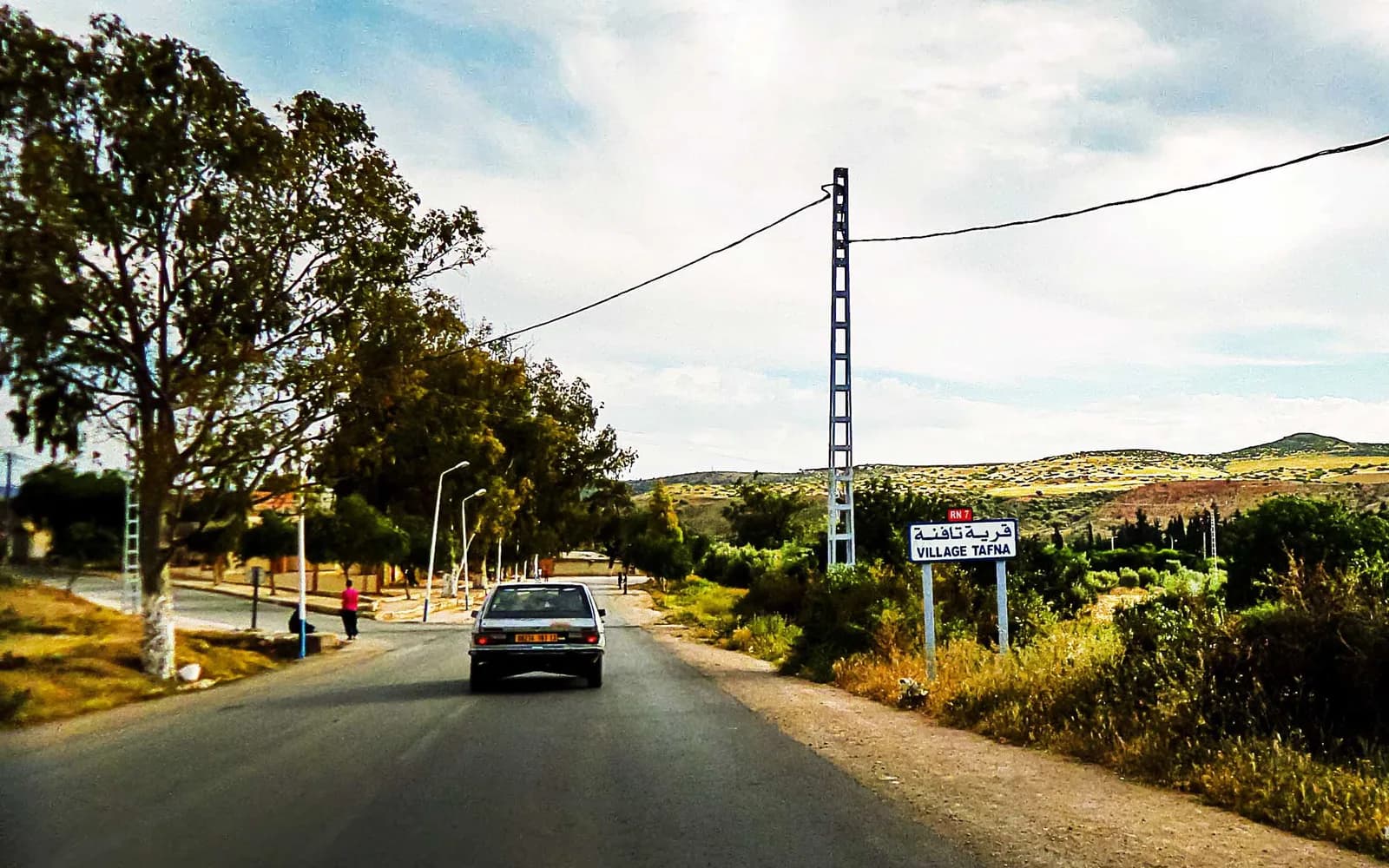
A country road lined with eucalyptus, a car ahead and a village sign on the rightWhere is this?
Map of the area around Tlemcen Province, Algeria
Answered by Orca
Likely

Tlemcen Province, Algeria

Likely area · about 50 km across · typical time 9 s

  • SignVillage sign in Arabic and French
  • PlantsEucalyptus and dry Mediterranean scrub
  • PolesLattice concrete power pole by the road
Illustration. Each photo is real and its place is the photographer’s own record (habib kaki, CC BY 3.0, Wikimedia Commons). The answers are written to show what each tier returns, not recorded Orca output. Maps © Mapbox © OpenStreetMap.

One question,
three answers.

Orca answers from the picture alone. It does not read GPS tags or any other metadata, so the answer is only as good as what can be seen, and it says so.

  1. 01

    Where is it?

    A place on the map, as precise as the scene allows: a country, a city, sometimes the street.

  2. 02

    What gives it away?

    The clues Orca read in the frame, named one by one. Road markings, signs, plants, the way the light falls.

  3. 03

    How sure is it?

    A confidence beside every answer, and the reasoning, so you can see what holds up and what does not.

Start with Orca.
Add Max when it matters.

Most questions end at Orca. Orca Max is the extra step for photos where the street or the building matters, and it starts from the answer Orca already gave. It takes about a minute, because it checks more.

Orca

For most questions

Good at what most people ask: where is this? The likely area, the clues, and how sure it is, in seconds.

  • A first look (D1)Where the scene is, broadly: the country or region. Median 4.7 seconds.
  • With the reasons (D2)The likely area, with the explanation and the clues behind it. Median 9 seconds.
  • From the picture aloneIt never reads the photo’s GPS tags or other metadata.
  • How sure it isA confidence beside every answer, and what it is unsure about.

On every account.

Orca Max

One step further

What’s a Max? Orca’s answer, taken a bit further. It keeps going for the street or the site, and shows the evidence it used.

  • Aims for the street or the siteThe standard check stops at the likely area. Orca Max keeps going for the exact street or building.
  • Weighs more candidate placesIt compares more possible places against your photo before it chooses.
  • Searches the webWhen it can read a landmark, business or street name, it looks it up to confirm.
  • Looks closer at detailsIt zooms into parts of the photo, like signs and shopfronts, that one pass can miss.
  • Checks itselfA second, independent read is compared with the first. If the two disagree, the confidence comes down.
  • Shows its evidenceYou see the clues it used and what each one points to.
  • Tests a candidatePick any candidate and have it checked against your photo and the satellite view of that spot.

It names a street or site only when the evidence supports it. It doesn't identify people or place indoor photos. Paid; see pricing.

Side by side

OrcaOrca Max
Answers toThe likely areaThe street or the site, when the photo supports it
Typical time (measured median)4.7 s first look · 9 s with reasonsAbout a minute (76 s)
Places weighed3 to 5, by plan5 or 6
Clues shownYesYes, with what each one points to
Zooms into signs and shopfrontsNoYes
Looks up names it can readNoYes
Second, independent readNoYes; disagreement lowers the confidence
Who can use itEvery accountPaid

Measured,
not promised.

How long real answers took in the Oceanir app over the last 30 days, from the moment a check starts to the answer on screen.

First look, median
4.7 s
9 in 10 within 8.7 s
With the reasons, median
9 s
9 in 10 within 19 s
Orca Max, median
76 s
Half land between 59 s and 117 s
Answers delivered
17.2k
In the 30 days to 16 November 2026
Time to answerBox: middle half · dot: median · line: 9 in 10 · log scale
Time to answer, by tierOrca D1, a first look: median 4.7 s, 9 in 10 within 8.7 s. Orca D2, with the reasons: median 9.0 s, 9 in 10 within 19.0 s. Orca Max D3, the closest look: median 1 min 16 s, 9 in 10 within 3 min 25 s.1s2s5s10s20s1m2m5mOrcaD1, a first look4.7 sOrcaD2, with the reasons9.0 sOrca MaxD3, the closest look1 min 16 s
When the answer arrives D1 D2 · share of answers per 2 seconds
When Orca answers arrive: most first looks land in 2 to 8 seconds; answers with reasons spread from 2 to 20 seconds.0s10s20s30s40s+
TierDepthAnswersMiddle halfMedian9 in 10 within
OrcaD1, a first look13,3734.0 s to 7.1 s4.7 s8.7 s
OrcaD2, with the reasons3,2274.4 s to 15.0 s9.0 s19.0 s
Orca MaxD3, the closest look20458.7 s to 1 min 57 s1 min 16 s3 min 25 s

Measured on real answers in the Oceanir app over the 30 days to 16 November 2026: server time from the start of a check to the delivered answer, bots excluded. Orca Max takes longer because it does more: it weighs more places, searches, and checks itself. Accuracy figures will be published with a frozen benchmark.

Asked from
156 countries.

Every dot is a country Orca was asked from in the last month. The bigger the dot, the more Orca is used there.

The 156 countries Orca was asked from in the last month.
One dot per country, at its capital. Land: Natural Earth.

Our top countries

  1. 01United States
  2. 02Türkiye
  3. 03Italy
  4. 04India
  5. 05Japan
  6. 06United Kingdom
  7. 07Germany
  8. 08Poland
  9. 09Mexico
  10. 10Spain

Wherever
you work.

One model behind the app, the API and your agents. An answer in one is the same answer in the others.

  • In the app

    On the web and on your phone. Ask, look at the map, keep your history.

    Open Orca
  • In your product

    The same answers over a REST API, with depth, confidence and clues as fields.

    Read the docs
  • In your agent

    Connect Orca to an agent through MCP and let it ask where a scene is.

    Set up MCP

Where Orca
can be unsure.

A precise-looking pin or a high confidence is not proof on its own. Compare the alternatives and check what matters before you rely on it.

Scenes that repeat
Suburbs, motorways and farmland can look alike across countries. Sometimes the evidence supports only a region.
Missing clues
Blurred signs, a cropped frame or a featureless view leave less to read.
Altered images
Edits, filters and composites can point Orca the wrong way.

Questions.

Short answers. The docs have the rest.

Is Orca free?

You can try Orca free with an account. Orca Max is part of the paid plans; the pricing page has the details.

When should I use Orca Max?

When the area is not enough: you need the street or the building, and the photo has the detail to get there. If Orca’s answer already settles your question, you don’t need Max.

Is Max always more precise?

No. Some photos don't hold enough clues for any search to place. Max names a street or site only when the evidence supports it, and says so when it can’t.

Why does Max take longer?

It does more: it weighs more places, zooms into details, looks up names it can read, and runs a second, independent read. Measured median: 4.7 seconds for Orca’s first look, 76 seconds for Max.

Does Orca use the location saved in my photo?

No. It does not read GPS tags or any other metadata. Every answer comes from what is in the picture.

Does Orca identify people?

No. Orca answers where a scene is, never who is in it. It doesn’t place indoor photos either.

Can I use Orca in my own product?

Yes. The same answers are available over a REST API and through MCP for agents. The docs cover inputs, depth and the response.

Orca and Manta

Orca is for everyone.

Manta is Oceanir’s physical inference model, for organizations whose findings get questioned: reviewed workflows, the full evidence record, and access arranged with us.

Meet Manta

Bring the next scene.