Manual geolocation is a person reading a scene, forming a hypothesis and testing it on maps. AI geolocation is software reading the same scene and ranking places. People argue about which is better. The more useful question is where each one earns its time.
The short version
Give the first pass to the tool and the confirmation to a person. Tools are fast, wide and consistent. People are better at context, contradictions and matching fixed features on a map. Each fails in a different way, so write down two alternatives before you confirm anything, and treat a tool's answer as a hypothesis.
01
What each does well
| Manual | AI estimation | |
|---|---|---|
| Breadth of knowledge | Limited to what the analyst knows. Strong at home, weak in unfamiliar regions. | Covers the world evenly, including regions no single analyst knows well. |
| Speed on a first pass | Slow. Reading a scene takes minutes to hours. | Seconds to a shortlist. |
| Consistency across a batch | Varies with fatigue and attention. | The same read on the hundredth image as on the first. |
| Judgment on context | Strong. Can spot a staged scene, a contradiction or a detail that does not belong. | Weak. Can be fooled by a scene that looks like somewhere else. |
| Matching fixed features on a map | Strong. This is the core of confirmation. | Not a substitute. Needs a person to check. |
| Knowing when it is out of its depth | Good analysts say so. | Depends on the tool. Some say when cues are few, some always sound sure. |
02
Where manual wins
- Confirmation. Matching a doorway, a rail line or a ridge on satellite and street-level imagery is a human job, and it is the step that makes an answer defensible.
- Contradictions. A person notices that the pole style says one country while the plate format says another. Spotting what does not fit is often what breaks a case.
- Context. Who posted this, when, and why would they claim this place? None of that is in the pixels.
- Staged and edited images. A person asks whether the image is real before asking where it is.
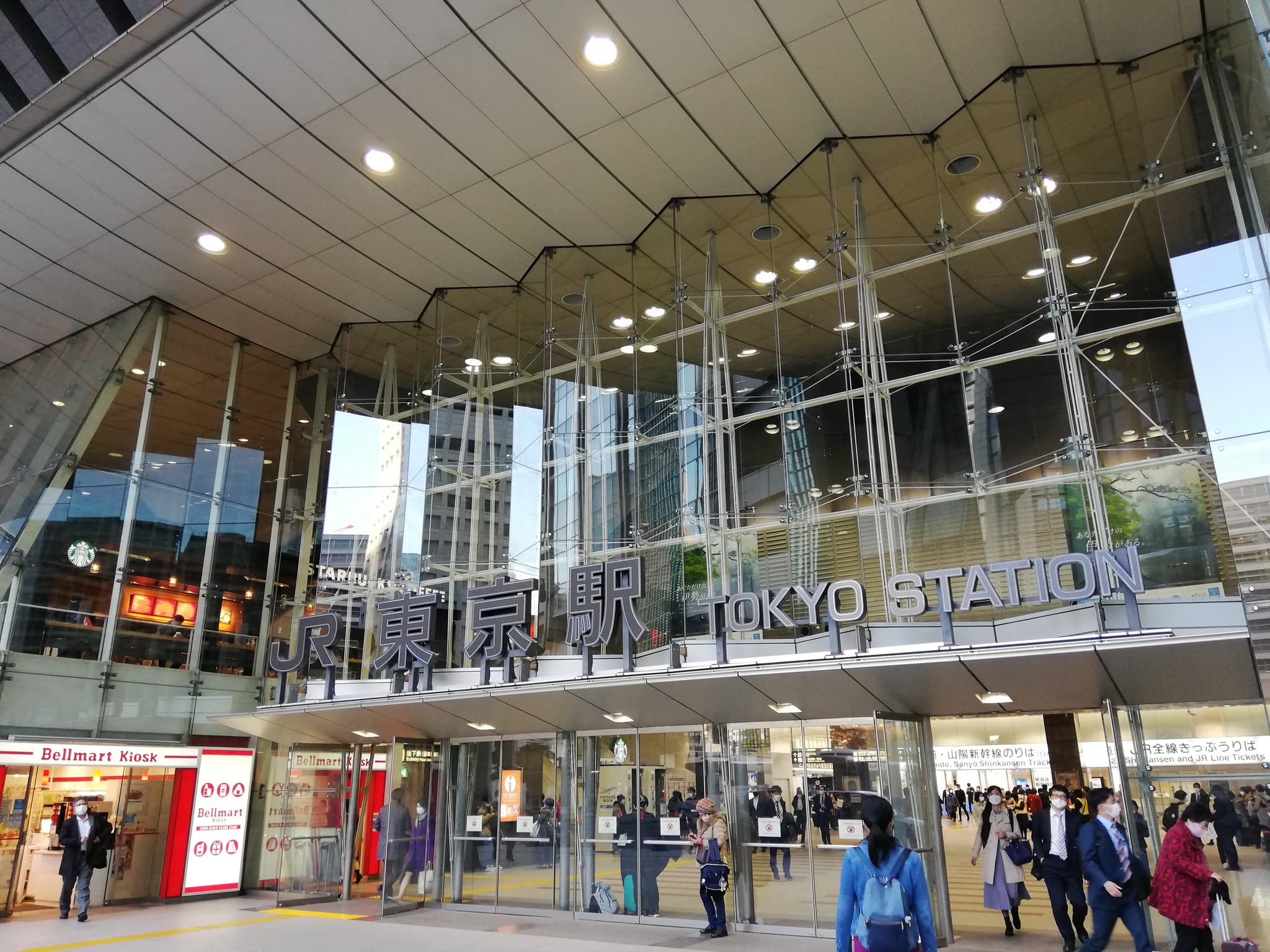
Photo: 先従隗始 · CC0 1.0 · Wikimedia Commons · 2021-11-26
Context a person weighs. The signs name the station, but a person still asks which entrance the gates and the glass facade point to, and whether the source's caption agrees. A tool can rank candidates. A person decides which one the evidence supports.
03
Where AI wins
- Triage. Sorting a hundred frames into those with something locatable and those without.
- Starting from nothing. An image with no obvious cues still gets a ranked list of regions to test.
- Regional knowledge you lack. It knows the road markings of countries you have never worked on.
- Staying consistent. It does not tire at image fifty.
04
How each one fails
Knowing the failure mode is how you catch it.
| Manual failure | AI failure | |
|---|---|---|
| Typical error | Anchoring: deciding early, then bending the evidence to fit. | A confident answer in a region that looks similar but is wrong. |
| What it looks like | A neat story with one strong feature and several soft ones. | A plausible place that matches the general style but not the specific features. |
| How to catch it | Write down two alternatives first. Ask what would prove you wrong. | Check the clues it cites against the image. Test its top three, not only the first. |
| Safeguard | A second reviewer who sees only the evidence. | Treat the result as a hypothesis until it is confirmed on a map. |
05
A split that works
- Preserve and record (manual). Source, date and hash.
- Triage (AI, then a glance). Sort the batch, and look at the weak pile yourself in case the tool was wrong.
- Shortlist (AI). Get ranked places for each strong or partial image.
- Test each candidate (manual). Match fixed features. Try to eliminate the top candidate before you accept it.
- Check contradictions and context (manual).
- Write the chain (manual). Include what the tool suggested and what you rejected.
06
When the tool and you disagree
| The tool says | You think | Do this |
|---|---|---|
| A confident place | The same place | Confirm it anyway. Agreement is not evidence. |
| A confident place | A different place | List the clues for each and test both on imagery. The one that fits more fixed features wins, not the one that came first. |
| Only a region, or unsure | A specific place | Write down the clues behind your guess and test them. Your clues have to be specific. |
| A ranked list | A place that is not on it | Test the list anyway, then your own. Add yours to the record. |
| Nothing useful | Nothing useful | Record the image as weak and stop. Do not spend more than the case needs. |
07
When to stop
- You have three independent features matching dated imagery, and nothing contradicts them.
- You have confirmed the level the case needs, even if you cannot go further.
- Every candidate has been rejected with a reason, and the image supports nothing more.
- More time would cost more than the answer is worth. Record what you tried.
08
Does practicing GeoGuessr help?
Yes, with a caveat. Playing builds the pattern knowledge manual geolocation depends on: which countries drive on which side, what utility poles look like, how road markings differ. But the game rewards a good guess in seconds. An investigation rewards a confirmed answer, and a guess you cannot confirm is worth nothing in a report. Use the game to learn the patterns and use investigation habits to check them.
09
How to tell which you are better at
Run the ten-photo test from the AI tools comparison blind, on yourself and on a tool. Where you are slower or less accurate than the tool, hand it that step. Where the tool misses, keep the step. The split is different for every analyst and every region, so measure it.
10
Where Oceanir fits
Oceanir covers the AI steps: a quick read that tells you whether an image has anything to work with, and a ranked shortlist with the clues for each place. It then gives you map and street-level comparison so you can begin the manual confirmation, and a saved record so you can write the chain. It does not replace the confirmation, and it never tells you who is in a photo.
11
Questions
Is AI geolocation as good as a human?
On breadth and speed it can beat one analyst. On confirmation, context and catching contradictions, a careful person still does better. That is why the best results combine them.
Should I trust an AI answer without checking?
No. Treat it as a lead and confirm it against imagery you can cite.
What should I learn first, manual methods or AI tools?
Learn the manual method first. It is what lets you judge whether an AI answer is any good.